Over 100,000 small and medium-sized businesses are non-compliant with e-invoicing norms under the goods and services tax (GST) regime, a mandatory requirement for businesses with an annual turnover of over Rs 5 crore. E-invoicing provides real-time access to invoices that are prepared by the supplier on the purchase of goods, allowing faster accessibility to input tax credit, thereby limiting the manipulation of fake credit as it has to be generated before the transaction. "The default has been reported mainly in businesses with a turnover between Rs 5 crore and Rs 20 crore," a senior official informed

Finance Minister Nirmala Sitharaman on Thursday said taxpayer base has almost doubled to 1.28 crore in four years of rollout of the historic tax reform and the enhanced GST mop up in the recent months should now be the "new normal". In a written message to tax officers on the fourth anniversary of GST rollout, she said implementing any reform of this scale in a large and diverse country like India can be highly challenging, but GST has brought about ease in taxpayer compliance and reduced common man's tax burden.

The finance minister is likely to announce the government's vision for a tax-friendly regime by raising the I-T exemption limit from the current Rs 250,000 per annum.

The new AIS is expected to make the taxpayer's task of filing ITR easier and faster, points out Bindisha Sarang.

Finance Minister Nirmala Sitharaman will present the Union Budget for 2023-24 in Parliament on February 1. The Budget is a statement of the government's estimated receipts and expenditures for a fiscal year (April 1 to March 31). It's divided into Revenue and Capital Budget. The Revenue Budget includes the government's revenue receipts and expenditures while the Capital Budget includes its capital receipts and payments.

'We have now drastically simplified it, primarily to two rates in long-term capital gains: 20% and the applicable rates. Similarly, in short-term capital gains.' 'For listed shares, there is a slight increase, but for unlisted shares, where indexation benefits are removed, there is a reduction in rates, benefiting unlisted companies, venture capital firms, etc.' 'Similarly, in real estate, wherever returns are higher, the new structure is beneficial. In very few cases, returns are lower, and those are more of an exception.'

In the case of double-income couples, not more than 40 per cent of the net income of one partner should be the EMI for the property.

'There are unscrupulous traders who create fake invoices by showing bogus e-way bills, movement of goods.' 'Since the entities registered across different states, and kept on changing their numbers, tracing them was difficult.'

Assuming we still have a Modi-led majority government after May 2024, there is no guarantee that reforms will move at anything more than a snail's pace, though we must be thankful even for that, notes R Jagannathan.

A readout of the meeting reportedly said Lord Johnson "made clear that he was keen to see a bigger Infosys presence in the UK and would be happy to do what he could to facilitate that".

The Budget has unveiled measures that should now pave the way for India to progress from Make in India to 'Innovate in India'.

Prime Minister Narendra Modi on Friday urged bureaucrats to make national interest the sole basis of their every decision, saying the country has put its faith in them and they must uphold that trust.
The GST collection in April touched the highest ever level of about Rs 1.68 lakh crore, up 20 per cent from the year-ago period, on improved compliance and recovery in business activity, the Finance Ministry said on Sunday. During the month, 1.06 crore GST returns from GSTR-3B were filed, of which 97 lakh pertained to March 2022. The gross GST revenue collected in April is Rs 1,67,540 crore, of which CGST is Rs 33,159 crore, SGST Rs 41,793 crore, IGST Rs 81,939 crore (including Rs 36,705 crore collected on import of goods) and cess Rs 10,649 crore (including Rs 857 crore collected on import of goods), the ministry said.
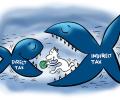
With the implementation of the goods and services tax less than 75 days away -- assuming July 1 as the roll-out date -- Sudipto Dey provides a guide to how businesses can navigate the transition.

India's Goods and Services Tax (GST) collection surged to Rs 1.30 lakh crore in October, the second highest since its implementation in July 2017, indicating economic recovery from the COVID-19 pandemic and impact of festive demand, a finance ministry statement said on Monday. The highest GST collection of Rs 1.41 lakh crore was recorded in April 2021. This is the fourth time in a row when the GST collection was upwards of Rs 1 lakh crore. The collection from GST was Rs 1.17 lakh crore in September, 2021.

The GST will also be applicable on the non-compete amount given by an employer to an outgoing employee, report Indivjal Dhasmana and Sudipto Dey.

The government has notified a host of procedural changes in the GST rules, including levy of interest for wrongful utilisation of ITC and turnover threshold for filing annual returns for the 2021-22 fiscal. The changes were vetted by the Goods and Services Tax (GST) Council at its meeting last week. With the amendments notified by the Central Board of Indirect Taxes and Customs (CBIC), businesses have also been allowed to make tax payments on the GSTN portal by using IMPS and UPI payment modes.

Expectations are running high for the Budget 2010 to do many things -- maintain growth, provide employment, reduce fiscal deficit, take steps to shift to the new Direct Taxes Code, take measures to implement Goods and Services Tax, reduce inflation and increase revenue for the government.

The cancellation of over a million duplicate or multiple permanent account numbers belonging to the same person or entity may have led to the disappearance of many of those who used to file returns earlier, but now no longer exist, says A K Bhattacharya.

During 2023, the Indian real estate sector - both housing and commercial - witnessed buoyancy fuelled by demand, supply, and absorption, and the sector is banking on the upcoming Budget to keep the momentum going. Mumbai-based Sattva Group wants the government to focus on the critical pillars for long-term growth. The company emphasised on the infrastructure boom with increased allocation, lower goods and services tax (GST) rates, incentives for affordable housing and single-window clearance to fast-track projects and support liquidity.

Amendments to RBI Act likely soon

What is most troubling is that not a single party that is part of INDIA has talked about any kind of reform and economic sense, argues R Jagannathan.

Whether it was the MGNREGS or the NFSA or the Aadhaar-based DBT scheme for cash transfer, the Modi government has built on the basic architecture created by the Singh government. Policy makers in the Modi government, instead of discarding them as products of the previous political regime, worked on them, expanded their scope and reach, and used new tools to improve their performance, explains A K Bhattacharya.

Certain technical problems are being faced by the taxpayers as a result annual return for the period July 1, 2017 to March 31, 2018 could not be furnished.

A record GST tax collection, an overhaul of the income tax return filing portal and the landmark move to scrap retrospective taxation have set the stage for the next level of reforms in tax administration that include bringing a framework for cryptocurrencies and rationalising the GST rate structure. With tax reforms such as faceless assessment taking roots, 2021 will go down as the year that pivoted the tax administration in a country aspiring to become the world's favourite investment destination. The task ahead is going to be a tough one as the tax department would grapple with taxing cryptocurrencies, rationalising Goods and Services Tax (GST) rates to shore up revenues and post June 2022, the scenario of how the GST revenue plays out for states without the Centre's support of compensation.

"This is completely untrue. Please do not re-circulate such message without checking it with authority," Adhia said.

The finance ministry has asked Infosys to provide within 15 days a plan for quick resolution of glitches on the GSTN portal, as it took strong note of the "unresolved" problems and "tardy" progress made over the last two years on multiple issues faced by taxpayers in filing returns. On Saturday, the revenue secretary A B P Pandey held a meeting with top Infosys officials on the persistent glitches seen on the GST network, and decided to ask Infosys chairman Nandan Nilekani to make an urgent presentation before the GST Council on March 14.

'Each state and central government body may be asked to update its system to ensure PAN is used as a common identification to access its services.'

The GST Council on Friday left taxes on COVID-19 vaccines and medical supplies unchanged after the BJP- and Opposition-ruled states sparred over whether tax cut benefits will reach the common man. Congress and other Opposition ruled states have been demanding a reduction in taxes but the central government felt the move may not result in tangible gains for people. "It is one thing to rush to say - do this, it will benefit the common man. But when the technical, fitment and law committees go into the details, you realise that that could have collateral impact on many others," Finance Minister Nirmala Sitharaman said. "I am not talking about the revenue generation aspect, but how many other items will get included in it as a result of which how you are going to implement it," she added.

Shares of asset management companies (AMCs) have rallied in the last 3-4 sessions due to clarity on regulatory changes in total expense ratios (TER) and expectations that it won't upset profits much in the long run. HDFC AMC has gained over 12 per cent in the last four sessions, while Nippon AMC and UTI AMC are up around 5 per cent. Aditya Birla Sun Life (ABSL), the only other listed AMCs, has risen more than 2.3 per cent in the last four sessions.

Goods like chocolates, chewing gum, shampoo, deodorant, shoe polish, detergents, nutrition drinks and marble will now attract 18% GST>

'GST gives a huge relief to small businesses of India and West Bengal.'
Jaitley said the GST Composition Scheme, under which small traders and businesses pay a 1 per cent tax based on turnover, can be availed by businesses with a turnover of Rs 1.5 crore, against the earlier Rs 1 crore, with effect from April 1.

The government has notified mandatory requirement of e-invoicing for B2B transactions for businesses with a turnover over Rs 100 crore with effect from January 1, 2021. Under Goods and Services Tax (GST) law, e-invoicing for business-to-business (B2B) transactions is mandatory for companies with turnover of over Rs 500 crore from October 1. In a notification, the Central Board of Indirect Taxes and Customs (CBIC) said e-invoicing will be extended to businesses with a turnover over Rs 100 crore from January 1.
The Goods and Services Tax (GST) Council, which is likely to meet in the third or fourth week of June, is set to clear the operational framework of the much-awaited GST appellate tribunal, which will deal with tax disputes and streamline resolution. "The final blueprint, mainly the operational part, is expected to be presented in the GST Council meeting for approval. "This will pave the way for the tribunal to be functional, both at the central and state levels," said a senior government official, who expects the tribunal to be up and running by November.

The data primarily pertains to activities in March, which had only a few days under the Covid-19 lockdown. For April , hence, CGST collections could be much lower, fear analysts.

'We revolutionised the system in a manner so that the chances of leakage will be much lower than it was in the beginning.'

West Bengal Chief Minister Mamata Banerjee will visit Chennai on November 2 and is likely to hold a meeting with her Tamil Nadu counterpart M K Stalin to discuss their strategies for the 2024 Lok Sabha poll, a senior government official said on Tuesday.
The gross tax revenues have touched 65 per cent of the Budget estimates at Rs 17.81 lakh crore during the first eight months of the current fiscal till November, propelled by corporate and personal income tax mop-up, according to the Economic Survey 2022-23 presented in Parliament on Tuesday. The survey, authored by Chief Economic Advisor V Anantha Nageswaran, said the 'substantial reforms' in India's taxation ecosystem post-2014 and policy reforms have removed the distortionary incentives from the economy. Reforms like GST, reduction in corporate taxes, exemption of sovereign wealth funds and pension funds from taxes, and removing Dividend Distribution tax have reduced the tax burden on individuals and businesses.
With Goods and Services Tax (GST) officers under pressure to exceed the Rs 1-trillion collection mark per month, industry has faced a barrage of recovery notices and summons issued over the last one month across sectors, according to company executives. Industry bodies have claimed harassment by field officers, blocking of input tax credit, cancellation of GST registration, threats of arrest and steep penalties, impacting their working capital and operations. Company executives pointed at an atmosphere of apprehension and fear due to such notices and summons.
